
These figures show the existing system in 2026.
Compare 2026 and 2029Our Network
Grid & Infrastructure
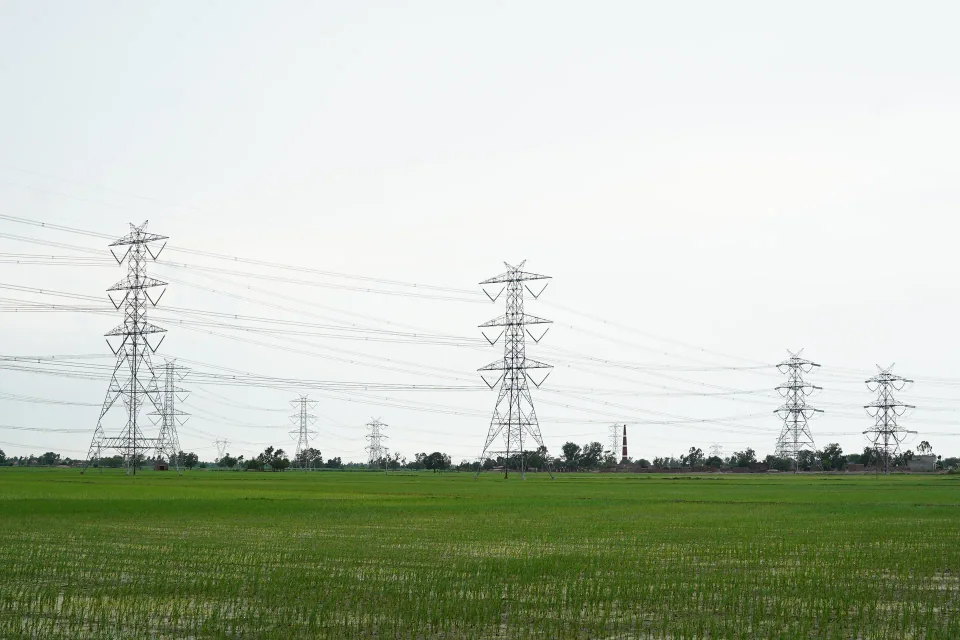
Spanning the country, NationalGrid-Pakistan’s extra-high-voltage network connects major generation sources with regional demand centres, enabling the secure and efficient transfer of bulk power across Pakistan. Through continuous network monitoring, infrastructure upgrades and effective system operation and maintenance, NationalGrid-Pakistan strengthens grid resilience and safeguards long-term network reliability.
Explore Our Operating RegionsNetwork image awaitedApproved image to be supplied by the client
The Network in Numbers
Network Overview
Explore the infrastructure behind Pakistan’s electricity transmission.
Grid Stations70Nos.
Transformation Capacity70,910MVA
Transmission Lines21,763circuit-km
±660 kV HVDC Interface
- 500 kV transmission lines
- 16Nos.
- HVDC transmission lines
- 886km
Connection details
NationalGrid-Pakistan interfaces with the Matiari-Lahore HVDC transmission system through sixteen 500 kV transmission lines and also maintains the 2 × 886 circuit-km HVDC transmission line.
NationalGrid | K-Electric Interconnection
- 500 kV tie-lines
- 2Nos.
- 220 kV tie-lines
- 5Nos.
Connection details
NationalGrid-Pakistan and K-Electric maintain interconnection through seven tie-lines: two at 500 kV and five at 220 kV.
By Region
Explore the Network by Region
View NationalGrid-Pakistan’s network in each operating region.
Northern network
Network Highlights
- Interconnects the hydel generation with the NationalGrid.
- Sources power to IESCO, PESCO, TESCO, HAZECO and AJ&K region.
- Covering the KPK province and the Islamabad Capital Territory.
The Islamabad region connects hydel generation with the national grid and serves KPK, the Islamabad Capital Territory and the AJ&K region.
11220 kV grid stations
2500 kV grid stations
Grid Stations
220 kV Grid Stations · 11
| No. | Station |
|---|---|
| 1 | Daud Khel |
| 2 | ISPR |
| 3 | University |
| 4 | Burhan |
| 5 | Shahi Bagh |
| 6 | Bannu |
| 7 | DI Khan |
| 8 | Nowshera |
| 9 | Mardan |
| 10 | Chakdara |
| 11 | Manshera |
500 kV Grid Stations · 2
| No. | Station |
|---|---|
| 1 | Rawat |
| 2 | Sheikh Muhammadi |
Network Expansion
The Network Towards 2029
Transformation Capacity by Voltage (MVA)
Network Expansion
The Network Towards 2029
What Changes by 2029
Existing in 2026Planned addition by 2029
Grid Stations
Planned increase+18Nos.
+25.7%
18 additional grid stations planned by 2029.
View voltage breakdown
| Voltage | 2026 | 2029 | Change |
|---|---|---|---|
| 765 kV | 0 | 2 | +2 |
| 500 kV | 20 | 26 | +6 |
| 220 kV | 50 | 59 | +9 |
| ±500 kV HVDC | 0 | 1 | +1 |
Values in Nos.
Transformation Capacity
Planned increase+25,995MVA
+36.7%
25,995 MVA of additional transformation capacity planned by 2029.
View voltage breakdown
| Voltage | 2026 | 2029 | Change |
|---|---|---|---|
| 765 kV | 0 | 6,000 | +6,000 |
| 500 kV | 29,100 | 40,150 | +11,050 |
| 220 kV | 41,810 | 49,180 | +7,370 |
| ±660 kV HVDC | - | - | - |
| ±500 kV HVDC | 0 | 1,575 | +1,575 |
Values in MVA.
Transmission Lines
Planned increase+4,400circuit-km
+18.7%
4,400 additional circuit-km of transmission lines planned by 2029.
View voltage breakdown
| Voltage | 2026 | 2029 | Change |
|---|---|---|---|
| 765 kV | 0 | 508 | +508 |
| 500 kV | 9,686 | 11,475 | +1,789 |
| 220 kV | 12,077 | 13,954 | +1,877 |
| ±660 kV HVDC | 1,772 | 1,772 | 0 |
| ±500 kV HVDC | 0 | 2 × 113 km | +226 |
Values in circuit-km.
Generation Context
The Installed Generation Mix
36,424 MW total installed capacity. These are generating stations connected to the network, not NationalGrid-owned generation assets.
IPPs Fossil Fuels17,061MW · 47%
Source: Indicative Generation Capacity Expansion Plan 2025–35.
For further details on the network and its development, download the Annual Report 2025. (PDF, 58.3 MB)
Grid Development
Building the Network
for What Comes Next
Explore the projects that strengthen the transmission system, connect new generation, address system constraints and modernise grid infrastructure. All our projects follow the expansion and investment plans approved by the Regulator.
 Loading image
Transmission Capacity Expansion
Reinforcing transmission lines and grid stations increases power transfer capability, strengthens connections between regions and supports the efficient movement of electricity across the network. Targeted upgrades help accommodate changing power flows and improve the utilisation of existing infrastructure.